
OpenVoice V2 vs ElevenLabs: Choosing Between Local AI Infrastructure and Managed Voice Platforms
OpenVoice V2: A Practical Assessment of Local AI Voice Infrastructure
For creators producing Reddit story narration, educational videos, podcasts, and other voice-driven content, AI voice generation has become an important part of modern production workflows.
However, comparing OpenVoice V2 and ElevenLabs as direct competitors can be misleading.
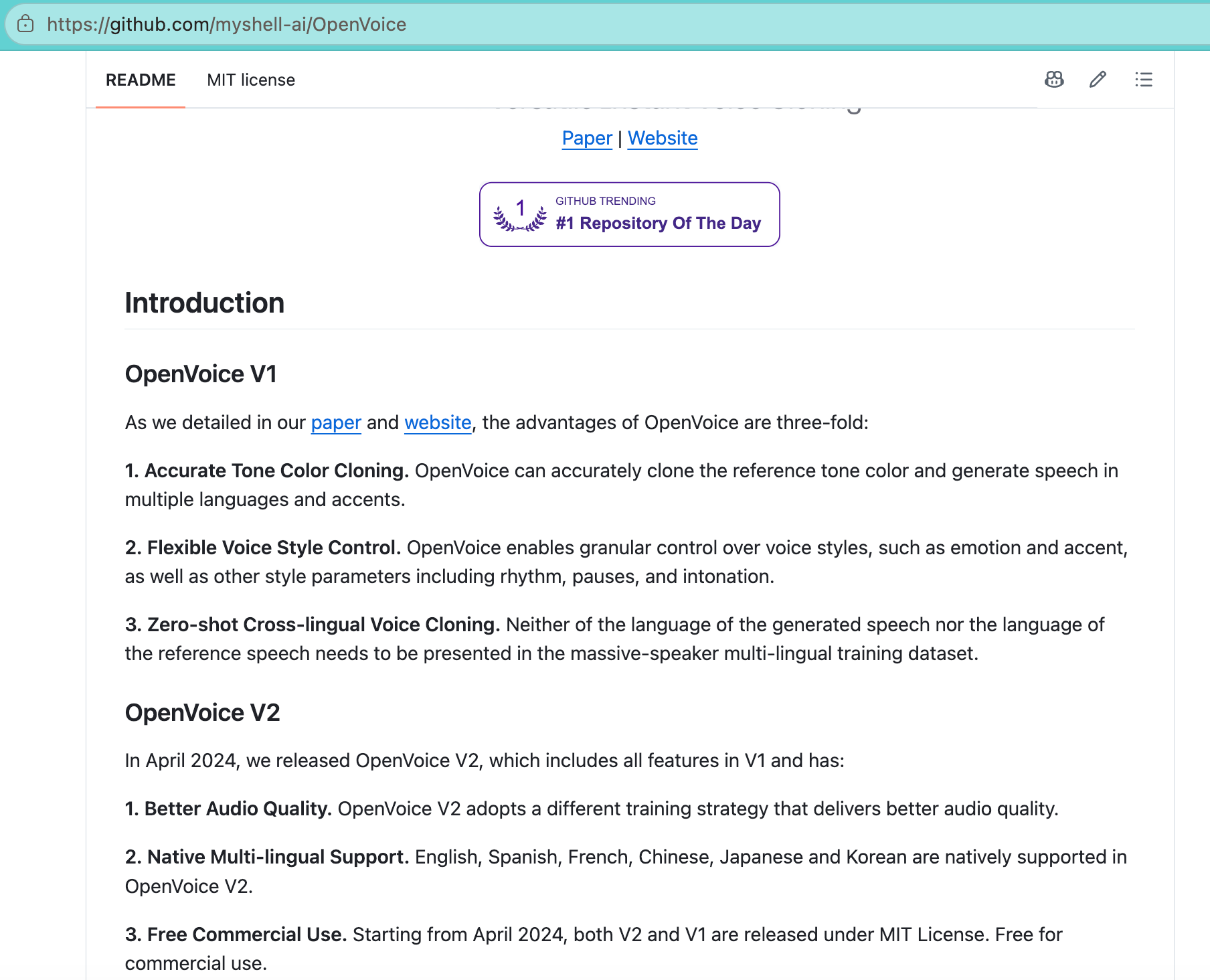
They represent two different approaches to building with AI:
- Managed AI platforms prioritize convenience, speed, and simplified production workflows.
- Local AI infrastructure prioritizes control, customization, and ownership of the technical stack.
The real question is not:
"Which tool is better?"
The more useful question is:
"When does owning AI voice infrastructure make sense compared with renting a managed service?"
Methodology
This analysis is based on:
- Public documentation and repository information
- Available product information from AI voice platforms
- Common workflow patterns observed among independent creators and software builders
The purpose of this article is not to declare a universal winner.
Instead, it examines the trade-offs between local AI deployment and managed AI services, and helps creators understand which workflow model matches their needs.
OpenVoice V2: A Pragmatic Assessment of Local Voice Conversion
OpenVoice V2 is not a direct replacement for ElevenLabs.
It is a locally deployed voice conversion system designed for creators who want more control over voice workflows.
Its main value comes from moving part of the AI voice pipeline from a managed platform into a user-controlled environment.
This creates a different trade-off:
More control requires more responsibility.
Users gain flexibility over:
- voice conversion workflows
- reference audio processing
- customization options
- local deployment choices
But they also take responsibility for:
- environment setup
- dependency management
- technical maintenance
- workflow optimization
Core Advantages: Where OpenVoice V2 Makes Sense
Local Control Over Voice Workflows
The biggest advantage of OpenVoice V2 is flexibility.
Unlike fully managed platforms, local AI workflows allow creators to experiment with how voice processing is integrated into their production systems.
This can be valuable for:
- technical creators
- AI workflow builders
- developers creating custom pipelines
- teams that need more control over their assets
The benefit is not simply lower cost.
The benefit is ownership of the workflow.
Reducing Dependency on Usage-Based APIs
One of the main reasons creators explore local AI tools is the increasing cost of usage-based services.
However, local deployment should not be considered "free."
A local workflow still includes:
- hardware investment
- electricity usage
- maintenance effort
- setup time
- technical troubleshooting
The economic advantage depends on production volume.
For creators generating large amounts of voice content, reducing recurring API dependency may become valuable.
For occasional users, managed platforms may still provide better overall efficiency.
Local Processing and Data Control
Another advantage of local deployment is greater control over data handling.
Creators may prefer local workflows when they need more control over:
- reference voice files
- generated audio assets
- production environments
This can be especially relevant for projects where workflow ownership and privacy are important considerations.
Inherent Limitations: The Hidden Costs of Local AI
Technical Complexity Becomes Production Cost
The main challenge with OpenVoice V2 is not only technical setup.
It is the additional operational responsibility.
A local workflow may require users to handle:
- command-line environments
- Python dependencies
- configuration issues
- model management
For technically experienced users, this can be an acceptable trade-off.
For creators who want a simple "upload and generate" experience, the additional engineering work may remove much of the productivity advantage.
It Is a Voice Conversion Tool, Not a Complete TTS Platform
OpenVoice V2 should be understood according to its actual role.
It focuses on voice conversion rather than providing a complete end-to-end AI voice production platform.
A complete workflow may still require:
- a base TTS model
- audio processing tools
- video editing software
- publishing tools
This distinction matters because OpenVoice solves a specific infrastructure problem.
It does not attempt to replace every part of a commercial AI voice platform.
Audio Quality Depends on the Entire Pipeline
OpenVoice output quality depends on multiple factors:
- source audio quality
- base models
- conversion settings
- production requirements
Commercial platforms such as ElevenLabs focus on providing a managed experience where much of this optimization is handled by the provider.
OpenVoice gives creators more control, but that control requires more involvement.
Decision Framework: Who Should Use OpenVoice V2?
OpenVoice V2 is not designed for every creator.
The right choice depends on three factors:
- production volume
- technical capability
- willingness to manage infrastructure
| Dimension | Suitable for OpenVoice V2 | Better With Managed Platforms |
|---|---|---|
| Output Frequency | High-volume voice production workflows | Occasional content creation |
| Technical Skill | Comfortable managing AI tools and technical environments | Prefer simple browser-based workflows |
| Infrastructure | Has access to suitable computing resources | Does not want hardware or maintenance responsibilities |
| Core Need | Voice customization and workflow control | Fast production with minimal setup |
| Data Requirements | Prefers local processing and greater control | Comfortable using cloud-based services |
| Production Style | Builds repeatable AI pipelines | Needs ready-to-use creative tools |
Before choosing OpenVoice V2, evaluate three practical questions:
- Is voice generation a significant part of your production workflow?
- Does owning the infrastructure provide strategic value?
- Are you willing to maintain the technical pipeline?
If the answer is no, a managed AI voice platform may provide better overall productivity.
OpenVoice V2 vs ElevenLabs: Different Solutions for Different Workflows
OpenVoice V2 and ElevenLabs are often compared as alternatives.
However, they operate at different layers of the AI voice ecosystem.
| Product | Nature | Workflow Role | Best For |
|---|---|---|---|
| OpenVoice V2 | Local voice conversion infrastructure | Custom voice workflows and experimentation | Technical creators and pipeline builders |
| ElevenLabs | Managed AI voice platform | End-to-end text-to-speech workflow | Creators prioritizing speed and convenience |
| Descript | AI-powered editing platform | Transcript-based video and podcast production | Content creators focused on editing workflows |
| Play.ht / Murf | Commercial AI voice services | Business and marketing voice production | Teams needing managed solutions |
| Open-source TTS projects | Self-managed AI infrastructure | Custom experimentation and development | Developers and researchers |
The key difference is:
OpenVoice gives creators more control over the infrastructure layer.
ElevenLabs provides a more complete managed experience.
The better choice depends on whether voice is a small feature or a core production capability.
Cost Structure: Ownership vs Subscription
The economics of local AI and SaaS platforms follow different models.
The comparison is not simply:
"Free versus paid."
It is:
"Infrastructure ownership versus operational simplicity."
| Approach | Main Costs | Advantages | Trade-offs |
|---|---|---|---|
| Local AI workflow | Hardware, maintenance, technical time | Greater control and reduced API dependency | Higher setup complexity |
| Managed AI platform | Subscription and usage fees | Fast deployment and minimal maintenance | Recurring operating costs |
| Cloud GPU workflow | Compute usage based on demand | Flexible scaling without hardware ownership | Variable expenses |
For high-volume creators, local infrastructure may become attractive because recurring API usage can represent a significant operating cost.
For smaller workflows, managed services often remain more efficient because they remove technical overhead.
The correct decision depends on total workflow cost, not only generation price.
Technical Capability Trade-offs
| Dimension | OpenVoice V2 | ElevenLabs |
|---|---|---|
| Workflow Style | Local AI pipeline | Managed cloud service |
| Setup Difficulty | Requires technical configuration | Minimal setup |
| Voice Control | More customization potential | Simplified user experience |
| Data Handling | Local processing possible | Cloud-based processing |
| Maintenance | User responsibility | Provider responsibility |
| Scaling | Requires infrastructure planning | Platform-managed scaling |
OpenVoice’s advantage is control.
ElevenLabs’ advantage is convenience.
These are different product philosophies rather than direct replacements.
When OpenVoice V2 Makes Strategic Sense
OpenVoice V2 becomes more attractive when:
- voice generation represents a major part of your content workflow
- you produce large amounts of audio content
- customization matters more than convenience
- you have technical skills or engineering support
- infrastructure ownership creates long-term value
Potential use cases include:
- AI content production pipelines
- experimental voice applications
- developer-led creator businesses
- customized voice workflows
When OpenVoice V2 Is Probably the Wrong Choice
OpenVoice V2 may not be the best option when:
- you create content occasionally
- you need immediate results without technical setup
- you prioritize the simplest workflow
- maintaining infrastructure is not part of your goals
For these scenarios, managed AI voice platforms usually provide better productivity.
Sources
-
OpenVoice official GitHub repository
https://github.com/myshell-ai/OpenVoice -
ElevenLabs official documentation and pricing information
-
Public documentation from AI voice platforms and infrastructure providers
Further Reading
If you found this analysis useful, explore more from our archive:
-
ElevenLabs Pricing Reality: Character Billing, Quality Trade-offs, and When It Makes Sense
-
Inside OpenSquilla: Local LLM Routing & Hardcoded TDD for Indie Devs
-
Remote Access on Weak Wi-Fi: CrossDesk Review for Browser-Based SSH & K8s Debugging
-
How Gumroad Reveals Product-Market Fit: A Healthcare UI Validation Experiment
-
Gumroad’s 10% Fee Explained: Real Cost Breakdown for Developers Selling Digital Products in 2026
A Quick Note
The analysis above combines public documentation, product information, and observed workflow patterns from independent software builders.
Software decisions depend heavily on individual requirements, technical capabilities, and production goals.
If you have experience with OpenVoice, ElevenLabs, or other AI voice workflows, we would love to hear your perspective: